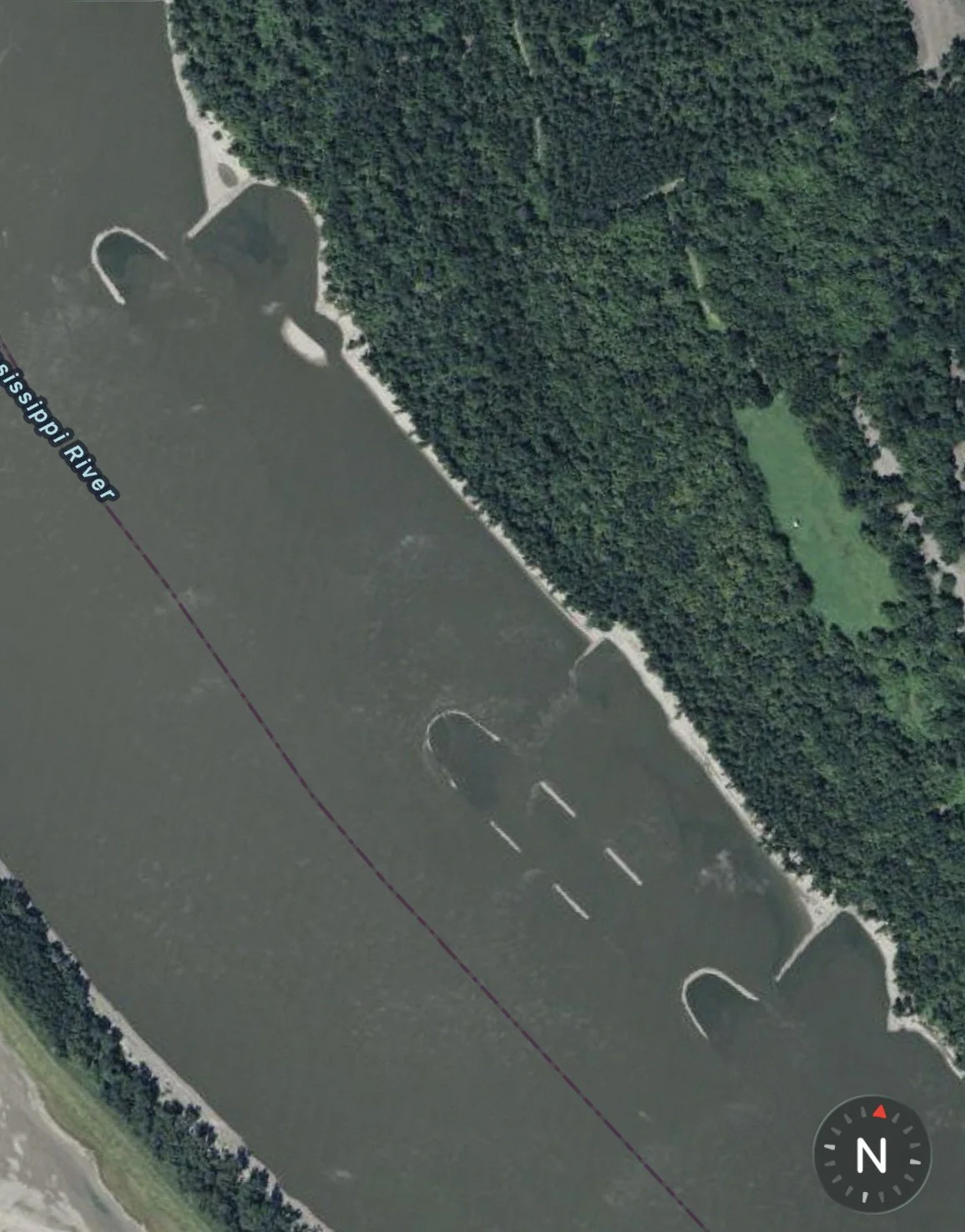
How can humanity keep one stretch of river more efficently maintained for ships? One answer can be found in the Corps’ Rock Island District. Enter the humble Horseshoe: These revetments made of rock help to force current into the designated navigation channel. Some of these features have trailing rock dikes to help keep the current more slack inside the structure during normal water levels. When the river crests, the whole apparatus gets inundated. Implementation of this type of structure at the Pilottown Anchorage could help maintain the navigation channel.
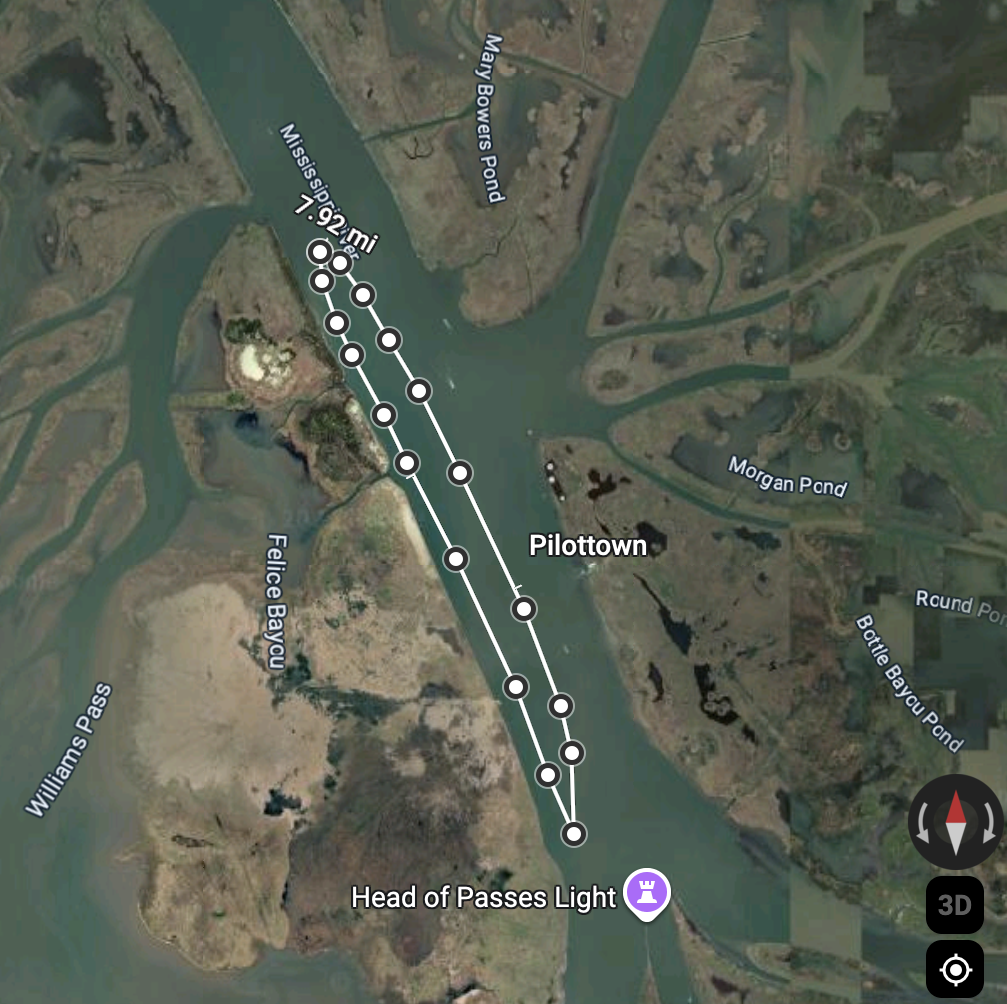
Proposed horseshoe at the Pilottown Anchorage.
The river is nearly 4,300’ across at Pilottown. Currents slow as the river continues to get wider. We mechanically remove sediment from the bottom of this stretch of river instead of using a more passive technique. For the dredging lobby, that’s a victory but we need to use those dollars propping up the coast, not working harder when we could work smarter.
The ship pilots and Corps have not reached a point of acceptance of the need for one-way navigation, something common with towboaters on bends in the Mississippi River upstream and around the Port of Houston. The idea of using a horseshoe at this location continues to stave off one-way navigation. Using a horseshoe at Pilottown would be the equivalent of holding one’s finger on the end of a waterhose, increasing the flow in the designated channel and reducing the need for dredging. It’s not necessarily my favorite management technique, but rather a stopgap measure that gives the old channel management ways a few more decades before something more drastic has to be done.
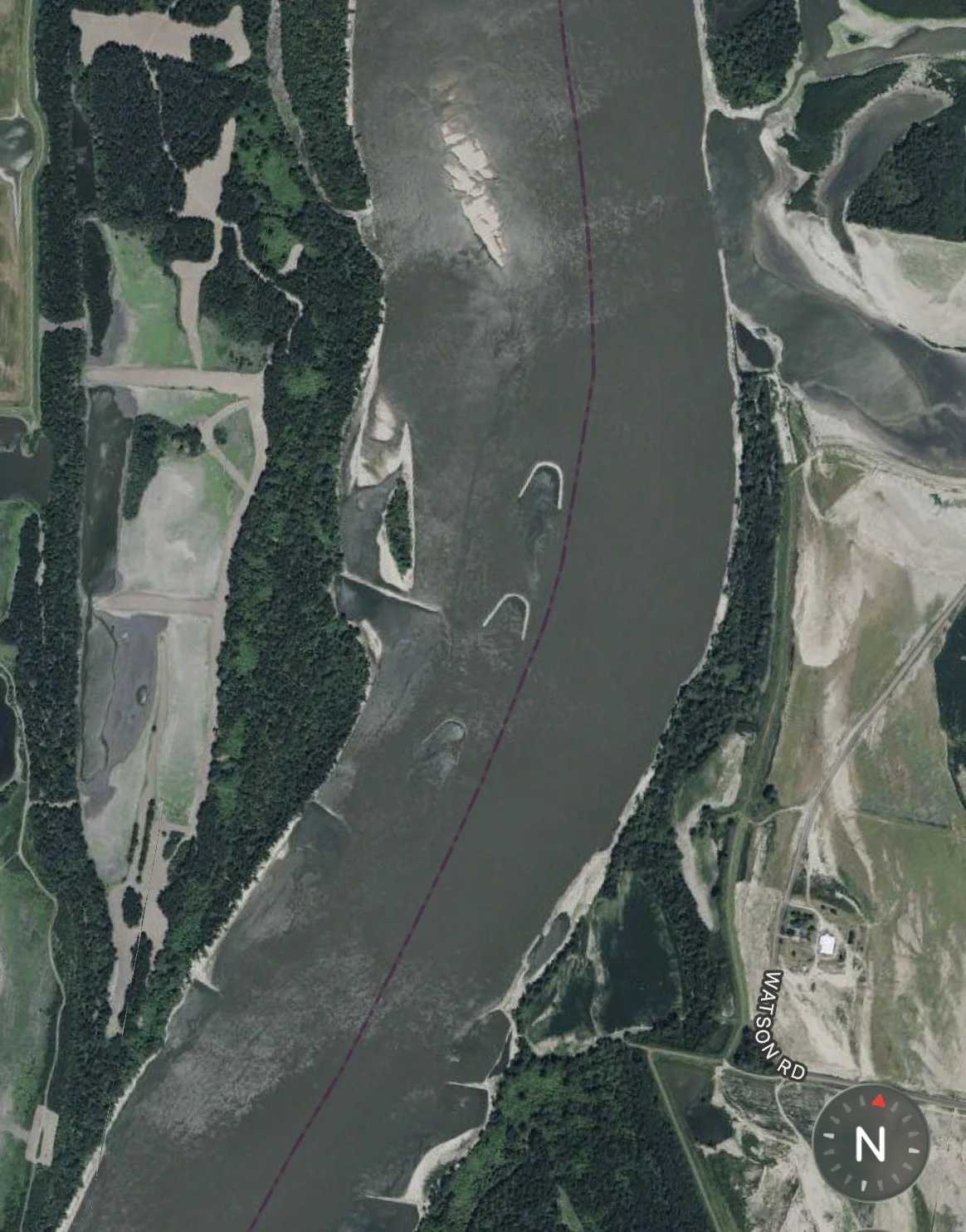
Horseshoe revetments installed near St. Louis
Additional benefits of building a Horseshoe in the Mississippi River just downstream of the West Bay Diversion would be a smaller boat lane on the west side of the river for local traffic. The area already has this pattern of a bar with deeper water just off the rocks on the westside (this is relative) and a much deeper dredged channel on the east side of the river. The horseshoe would help further channelize the way nature wants to work the river in this stretch. Of course, lower annual dredging cost would be garnered from such an installation too. A horseshoe would make for a modest change that leans into what the river want to do while providing safer transit for both ships and small vessels.